
Minerals are a large and diverse group of raw materials used in cosmetics. Minerals are essential to skin care and are therefore used in many different products. The skin itself contains naturally many different minerals. Therefore, minerals are very natural ingredients in skin care. In this article, I will tell you about the different minerals used in cosmetics and how they are processed in different products.
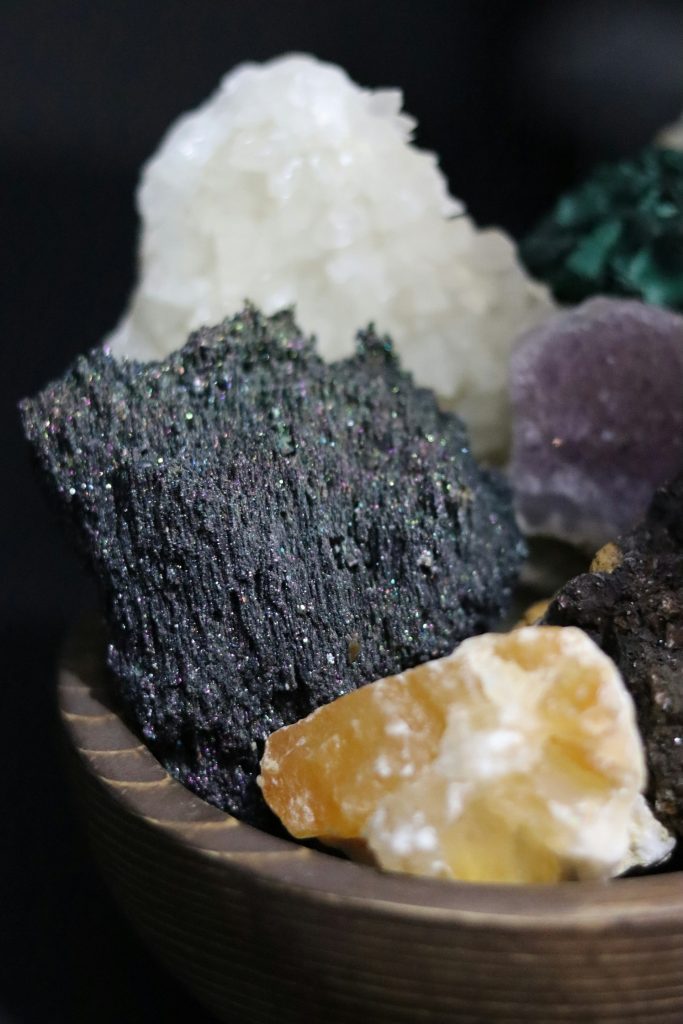
Minerals in cosmetics include many different ingredients
Cosmetic minerals are usually known as cosmetic clays or, for example, Epsom and table salt. However, the range of minerals used in cosmetics is very wide. Most often, minerals are powdered, but they also occur in liquid form.
The best-known and oldest cosmetic minerals are of course clays. Rhassoul clay, French green clay and kaolin clay are cosmetic products that everyone knows. Salt has also been used extensively in cosmetics for thousands of years.
Lesser-known cosmetic minerals are volcanic ingredients, which are obtained from volcanic lava rocks.
Cosmetic minerals can also be found in liquid form and in very surprising products. For example, popular cosmetic liquids such as coconut water and aloe vera gel contain a lot of minerals. Nettle water and many other liquids extracted from natural herbs are also surprisingly rich in minerals. Everyone also knows that ordinary tap water and spring water contain minerals. When tap water contains a lot of minerals, we talk about hard water.
Basic information about minerals
Minerals are inorganic compounds that occur naturally. In nature, minerals are found in rock material. Natural stones and rocks typically contain 3–5 different minerals. Some minerals are elements and some are compounds.
The more common minerals are calcium, potassium, magnesium, iron, zinc and silicon. These are all elements.
When dissolved in water, minerals change the pH of the water to be more alkaline.
Cosmetic clays
Years ago, I talk about many cosmetic clays on the Helenatur blog. Let’s go over the basic information about clays again.
Clays are 100% natural products. Clays consist of very finely ground rock. The minerals in the rock depend on where in the world and what type of rock the clay comes from.
Cosmetic clays are not just any clay. They are carefully researched products. The mineral composition of each type of clay is known in detail. Each type of clay affects the skin in different ways, depending entirely on the minerals contained in the clay.
Compounds contained in clay, aka clay minerals
• Kaolin (kaolinite), montmorillonite (bentonite/pH clay), illite, chlorite.
Elements in clay
• Silicon, aluminium, iron, calcium, magnesium, and sodium
The aluminium in clay has been found to be safe when used in cosmetics. Although clay is rich in aluminium, it is in a chemically bound form – typically as aluminium silicate – that does not behave like the free aluminium salts used in antiperspirants.
Clay is used in cosmetics in face masks, some natural deodorants, powders, eye shadows, and as an exfoliant.
When working with clay, the shelf life of the product must be considered. Clay is a porous material that does not react well with preservatives. Natural preservatives do not work well when preserving emulsions containing clay. Therefore, clay products are often sold as a powder to be mixed with water or as products that do not contain any water at all.
Volcanic ingredients
Volcanic material is created by volcanic lava eruptions. Volcanic material contains very different minerals than clays because lava comes from deep within the Earth. The slopes of volcanoes are considered the most fertile areas in the world because plants love the soil enriched by lava. That is why volcanic materials have also started to be used in skin care.
When hot lava erupts into the sea, a dark dusty substance rises to the surface of the water. This is called volcanic sand. Don’t be scared by the word sand. Volcanic sand is so light that it can float on the surface of the water. It is not sharp like regular sand. Volcanic sand is also not the same as volcanic ash. Volcanic ash is abrasive and should not be used in skin care.
Volcanic sand is formed wherever there is an active volcano and the sea. Iceland, the Canary Islands and Hawaii are, for example, places where volcanic ash is obtained.
The lava rock material is mainly basalt. Volcanic sand contains a lot of magnesium, silica and manganese. These minerals have been used since ancient times to improve blood circulation and maintain skin health. Volcanic sand also contains small amounts of garnet, zirconium, and titanium. These minerals are not found in any natural clay.
Volcanic sand brightens the skin and reduces inflammation. It does not contain any allergenic substances, so volcanic sand is often used to relieve the symptoms of inflammatory skin diseases.
Volcanic sand also works well as a gentle exfoliant.
Cosmetic Salts
Salt is a very popular mineral in cosmetics. In addition to sodium, real sea salt also contains potassium and magnesium and small amounts of other minerals.
Salt softens dead skin cells and causes them to renew. That is why salt is recommended to be added to foot baths and bath water in general. I have myself made a simple and inexpensive chemical peel from salt water and ground flax seeds. It is suitable for the face and also for the whole body.
Salt is quite demanding to work in emulsions. A conditioner containing salt sounds attractive. However, a conditioner containing salt is quite difficult to implement with the most common emulsifiers in natural cosmetics. I have seen a natural cosmetics-grade emulsion containing salt in the store, where the water phase had separated. I recommend salt only for anhydrous products. A salt scrub with fine salt and oils is a very effective and usable product.
Liquid minerals
All natural liquids used in cosmetics contain minerals. Tap water also contains some minerals, depending on your location. Because minerals create instability in emulsions and reduce shelf life, cosmetic manufacturers use distilled water as the liquid in their products. Distilled water is sold as battery water. It is pure, mineral-free, and is recommended for use in cosmetics instead of tap water.
Hydrolats are distilled and mineral-free, so they are particularly suitable for making cosmetics.
Aloe vera gels and coconut water are very popular water phases for emulsions. However, you should be careful with them because they contain a lot of different salts. Too much salt can break the emulsion. Some emulsifiers are more tolerant to salts. If you want to make an emulsion from coconut water, you should pay attention to the choice of emulsifier.
Xanthan gum may also lose its effectiveness in an environment that is too mineral.
Working with minerals is fun
I have stocked up on all possible minerals. I always buy large quantities of different clay types at once. Minerals do not expire like other cosmetic raw materials. Protect minerals from moisture and dust. It is most convenient to pack minerals in jars with lids and store them in a dry place. This way they do not clump. Label each jar with precise information about the product.
Compare different minerals. There are big differences in how clays behave on the skin. This way you will learn which type of clay suits your skin best.